
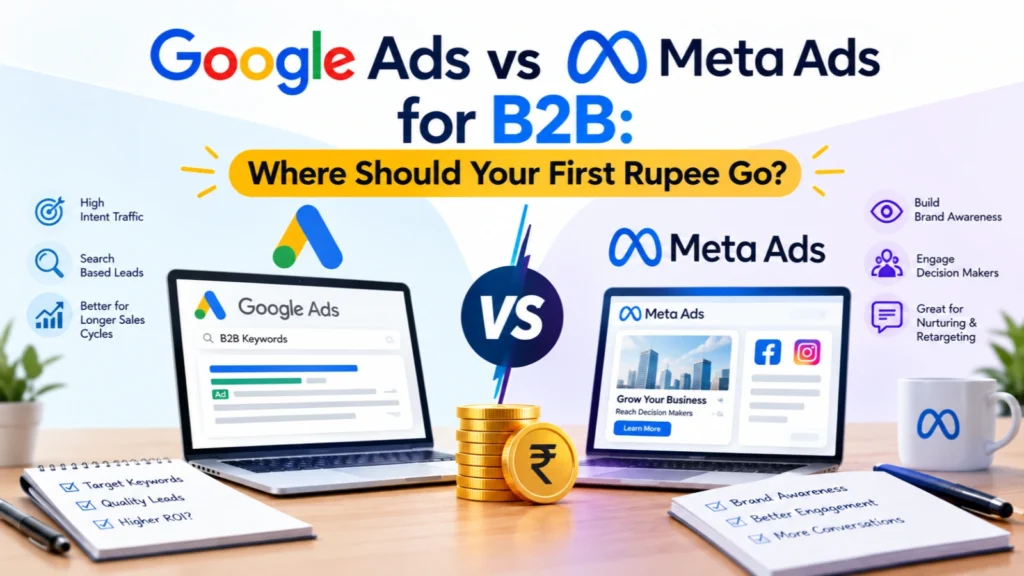
Quick answer: Google Ads generally performs better for B2B businesses when there’s clear search demand — buyers actively searching for a solution, a vendor, or a comparison. Meta Ads generally performs better for building awareness and generating interest among an audience that isn’t actively searching yet, using targeting based on job role, industry, and interests. Most B2B businesses starting out should lead with Google Ads if there’s meaningful search volume for their service, and add Meta Ads once they need to build broader awareness beyond active searchers.
The core difference in plain terms
Google Ads shows up when someone is actively searching for something — “web development agency Delhi,” “custom CRM integration,” etc. You’re capturing existing demand. Meta Ads shows up while someone is scrolling, not searching — you’re creating interest in an audience that fits your target profile but wasn’t actively looking. Both are valid, but they solve different problems.
When Google Ads is the better first move
– There’s meaningful, identifiable search volume for what you offer
– Your sales cycle starts with the buyer researching solutions themselves
– You want measurable, intent-driven leads relatively quickly
When Meta Ads is the better first move
– Your service or product is newer or less commonly searched by name
– You want to build brand awareness among a specific audience (by job title, industry, company size) before they start actively searching
– You have strong visual or case-study content that performs well in a scrolling, discovery-based format
A realistic starting budget split for most B2B businesses
If there’s decent search volume for your core service, start with roughly 70% of budget in Google Ads and 30% in Meta Ads for awareness-building, and adjust based on which channel is actually producing qualified leads after the first month of real data. If search volume for your specific service is low, flip that ratio and lean more heavily on Meta Ads to build initial awareness and demand.
The mistake that wastes the most budget
Running both channels with the same generic messaging and creative. Search ads should speak to someone who already knows what they want and is comparing options. Social ads need to earn attention and interest from someone who wasn’t actively looking — using identical ad copy across both consistently underperforms compared to messaging tailored to each context.
FAQ
Can I run both channels at once as a beginner?
Yes, but start with a clear budget split and track results separately for at least a month before optimizing — running both without clear tracking makes it hard to know what’s actually working.
Which channel is cheaper for B2B?
It depends heavily on your industry and competition level on each platform — there’s no universal answer, which is why testing with a modest budget on both before scaling either is the safer approach.
Should LinkedIn Ads be part of this conversation too?
For B2B specifically, LinkedIn Ads is often a strong third option, particularly for reaching specific job titles — but it typically costs more per click than Google or Meta, making it better suited once you have budget to expand beyond the initial two channels.