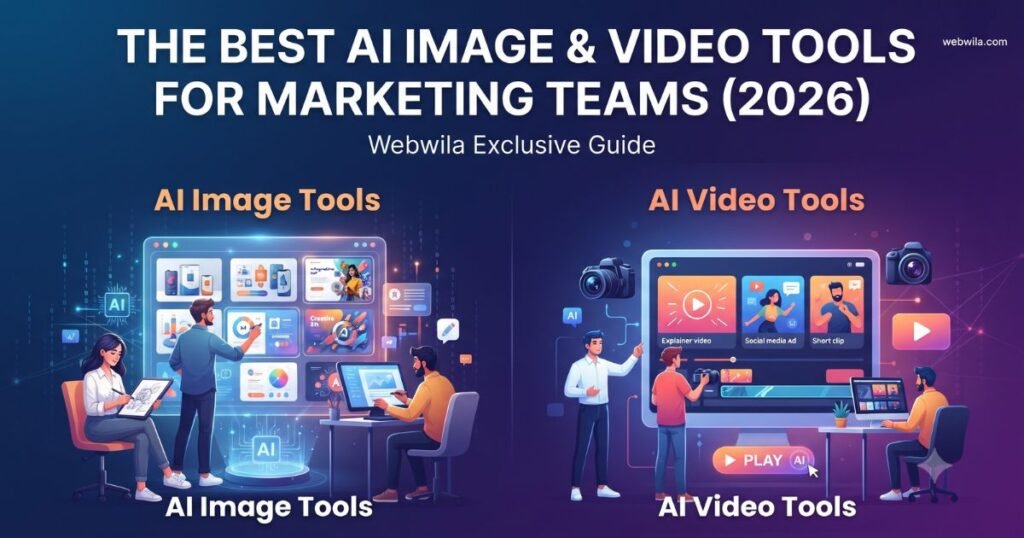
Quick answer: AI image and video tools are genuinely useful for marketing teams for first-draft visuals, quick social content variations, basic video editing tasks (captions, resizing, background removal), and rapid concept testing. They’re not yet a full substitute for brand photography, polished product visuals, or anything requiring precise brand consistency — those still benefit from human design oversight.
Where AI tools are genuinely useful right now
Rapid concept testing. Before committing budget to a professional shoot or design project, AI-generated drafts let a team test multiple visual directions quickly and cheaply.
Social content variations. Resizing, reformatting, and creating quick variations of existing approved creative for different platforms is a strong, low-risk use case.
Basic video editing tasks. Auto-captioning, background removal, and format resizing are mature enough to reliably save real editing time.
First-draft visuals for internal use. Presentation graphics, internal concept mockups, and placeholder imagery during a project’s early stages.
Where a human is still the better call
Anything representing your actual product or team. AI-generated imagery can’t substitute for real photos of your actual work, team, or facility — and B2B buyers specifically respond better to authentic visuals over polished-but-generic ones.
Final brand-consistent creative. Precise adherence to brand guidelines (exact colors, logo placement, tone) is still more reliably executed by a designer than generated fresh each time by AI.
High-stakes campaign creative. For a major campaign where visual quality directly affects perception, human design review and refinement remains worth the investment.
A sensible workflow that uses both well
Use AI tools for the early, exploratory, and high-volume parts of visual content — first drafts, variations, quick social content — and reserve human design time for final polish, brand-critical assets, and anything representing your actual product or people. This gets speed where speed matters and quality where quality matters, rather than picking one approach for everything.
The mistake to avoid
Publishing unedited AI-generated imagery as final brand content, especially for anything customer-facing. It’s often detectable, and for B2B audiences specifically, it can quietly undercut the credibility the content was meant to build. Treat AI visual output the same way you’d treat an AI-written draft — a starting point, not a finished product.
FAQ
Can AI tools fully replace a graphic designer for a small business? For occasional, low-stakes content, largely yes. For brand-consistent, customer-facing creative at any meaningful volume, a designer’s oversight still produces a noticeably better and more consistent result.
Is AI-generated video good enough for ads yet? It depends heavily on the use case — short social clips and basic edits are often fine; polished brand or product video generally still benefits from human production and editing.
How do I know if AI-generated visuals will hurt or help my brand? Test with a small, low-stakes placement first (a single social post, not a full campaign) and gauge audience response before scaling up usage.