
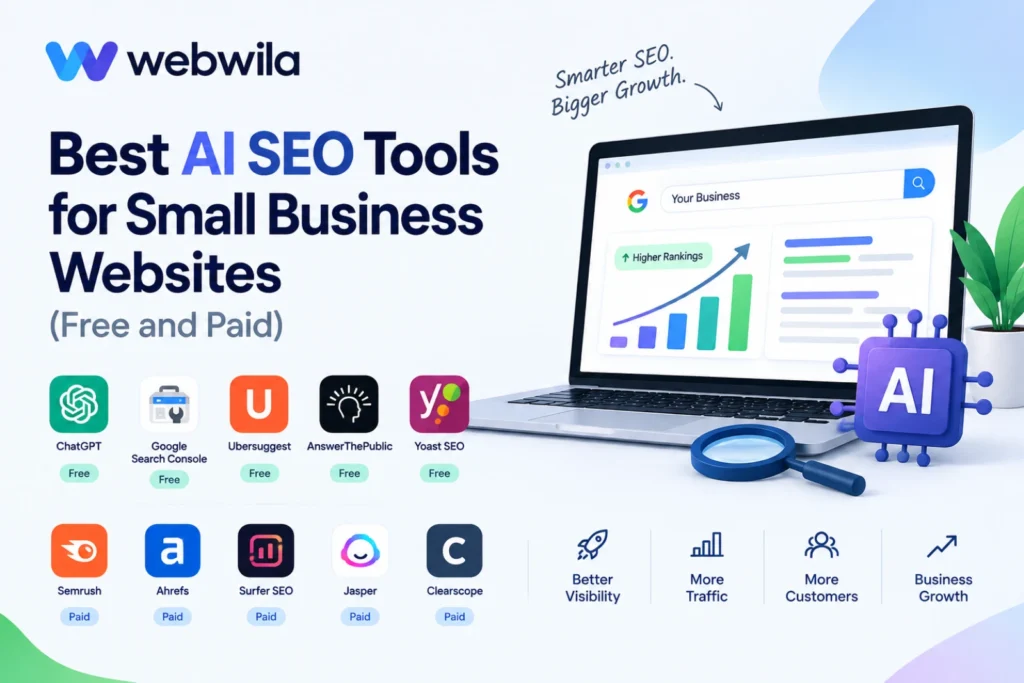
Quick answer: A practical small-business AI SEO stack covers four jobs: keyword and question research, on-page content optimization, technical/schema auditing, and AI-search visibility tracking. Free tools cover the first three reasonably well; AI-search visibility tracking (whether ChatGPT/Perplexity actually cite you) is a newer category that’s still mostly paid.
The four jobs an AI SEO stack needs to cover
1. Keyword and question research
Free “people also ask” and question-research tools help you find what your audience is actually searching, which doubles as AEO-friendly content structure since real questions make natural H2s.
2. On-page content optimization
Tools that score readability, keyword usage, and content structure against top-ranking competitors help ensure new content is competitive before it publishes, not after.
3. Technical and schema auditing
Tools that crawl your site for broken schema, missing meta descriptions, and slow-loading pages catch the technical issues that quietly cap how well even great content performs.
4. AI-search visibility tracking
A newer category of tools that check whether ChatGPT, Perplexity, and Google’s AI Overviews are actually citing your content for target queries. This is the closest thing to a “rank tracker” for the AI-search era, and worth budgeting for once your content foundation (schema, answer blocks, FAQ formatting) is solid.
A sensible way to build the stack without overspending
Start free across research, optimization, and technical auditing — most small businesses can run a solid content program on free tools alone for the first several months. Add a paid AI-visibility tracking tool once you’re publishing consistently and want to measure whether your AEO efforts are actually landing, rather than guessing.
The mistake to avoid
Buying an expensive all-in-one SEO suite before you have a consistent publishing habit is a common way small businesses waste this budget. Tools amplify a content strategy that’s already working — they don’t create one from nothing. Get the content rhythm going first with free tools, then invest in paid tracking and optimization once you have real output to measure.
FAQ
Do I need paid tools to rank well in 2026?
Not necessarily for content creation and basic technical SEO — free tools cover those well. Paid tools become more valuable specifically for AI-search visibility tracking and at higher publishing volume.
How do I know if a tool is worth paying for?
If it saves more time or surfaces more actionable issues than you could find manually in a reasonable amount of time, it’s paying for itself. If you’re not using most of its features, it’s not.
Is keyword research still relevant if I’m optimizing for AI search too?
Yes — AI tools still draw from indexed web content, so strong keyword and topic research remains the foundation both classic SEO and AEO are built on.