
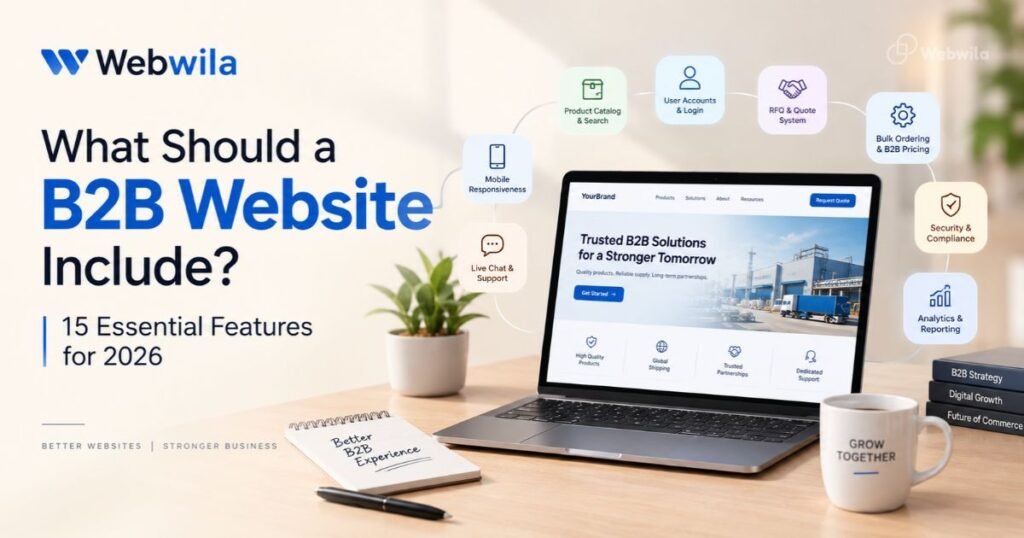
A B2B website needs to do more than look professional. It should help business buyers understand your offer, verify your credibility and contact your team with confidence. For manufacturers, suppliers, exporters, wholesalers and distributors, the right website features can make the difference between a casual visit and a qualified enquiry.
Here are 15 essential features to consider when planning or improving a B2B website in 2026.
1. A Clear, Buyer-Focused Homepage
Explain what your company supplies, who you serve and what makes your business relevant. Use a direct headline, concise supporting copy and a clear enquiry call to action.
2. Dedicated Product and Category Pages
Organize products into logical categories. Give important product lines their own pages so buyers can find relevant details and search engines can understand your offering.
3. Detailed Product Specifications
Include relevant specifications such as dimensions, materials, grades, variants, applications, packaging and available standards. Share only information that applies to your products and business.
4. Strong Request-a-Quote Forms
Make it easy for a buyer to describe their requirement. Ask for useful details such as product, quantity, destination and contact information, but avoid overwhelming visitors with unnecessary fields.
5. Visible Contact Options
Provide clear business contact details and an easy way to reach sales. Keep calls to action consistent across the homepage, product pages and contact page.
6. Company Credentials and Trust Signals
Show relevant certifications, quality processes, experience, facilities, client industries and export markets where applicable. Support claims with accurate, verifiable information.
Read our guide to website trust signals for international B2B buyers.
7. Industries and Applications Pages
Help buyers understand where your products or services fit. Dedicated industry and application pages can address specific needs more clearly than a generic company overview.
8. Downloadable Catalogues and Resources
Where useful, offer product catalogues, technical sheets, brochures or specification documents. Keep downloadable files current and make their purpose clear.
9. Mobile-Friendly Design
Ensure text is readable, navigation works on small screens, forms are easy to complete and important enquiry buttons are accessible on mobile devices.
10. Fast Page Performance
Compress images, avoid unnecessary scripts, use reliable hosting and monitor page performance. Slow pages can frustrate buyers before they reach the information they need.
11. Search-Friendly Site Structure
Use descriptive page titles, logical headings, readable URLs, useful internal links and unique content for key products and services. Build pages around the actual terms your target buyers use.
Explore WebWila SEO services for support with search visibility and site structure.
12. Helpful FAQs
Answer common questions about minimum order quantities, lead times, customization, delivery areas, product availability and enquiry processes—only where the answers are accurate for your business.
13. Case Studies and Testimonials
Where permission is available, show examples of customer problems solved, industries served and outcomes achieved. Avoid unverifiable claims and disclose context where needed.
14. Analytics and Search Monitoring
Set up suitable analytics and search performance tools to understand which pages attract visitors, what searches bring them in and where enquiries originate. Review the data regularly and improve pages based on evidence.
15. Clear Privacy and Security Practices
Use HTTPS, keep website software updated and provide a privacy policy that explains how enquiry information is handled. Restrict access to business systems and protect form submissions appropriately.
How to Prioritize These Features
If you are starting with a limited budget, begin with the essentials: a clear homepage, focused product pages, credible company information, contact or quote forms, mobile-friendly performance and basic SEO. Add advanced resources and industry pages as you learn which buyer needs matter most.
Build a B2B Website Around Your Sales Goals
The right features depend on your products, sales process and audience. A manufacturer may need detailed specifications; an exporter may need clear information about markets served and quality standards; a distributor may need a searchable catalogue and a simple way to request pricing.
WebWila helps B2B businesses plan websites around buyer trust, Google visibility and qualified enquiries. Explore our B2B Website Development service or contact our team to discuss your project.
FAQs
What is the most important feature of a B2B website?
There is no single feature for every business, but clear product information, visible trust signals and a simple enquiry path are essential for many B2B companies.
Does a B2B website need online checkout?
Not always. Many B2B businesses use quote requests and sales conversations because pricing, quantities or specifications vary by customer.
How many pages should a B2B website have?
Build enough useful pages to explain your company, products, industries and buyer requirements clearly. Prioritize quality and relevance over a fixed page count.
Can these features help SEO?
Yes. Useful product pages, clear site structure, fast mobile performance and relevant content can support search visibility, although rankings depend on many factors and are never guaranteed.
Final Takeaway
A strong B2B website helps buyers answer three questions quickly: Can this company meet my needs? Can I trust it? How do I enquire? Build around those questions, then keep improving the experience with real visitor and enquiry data.