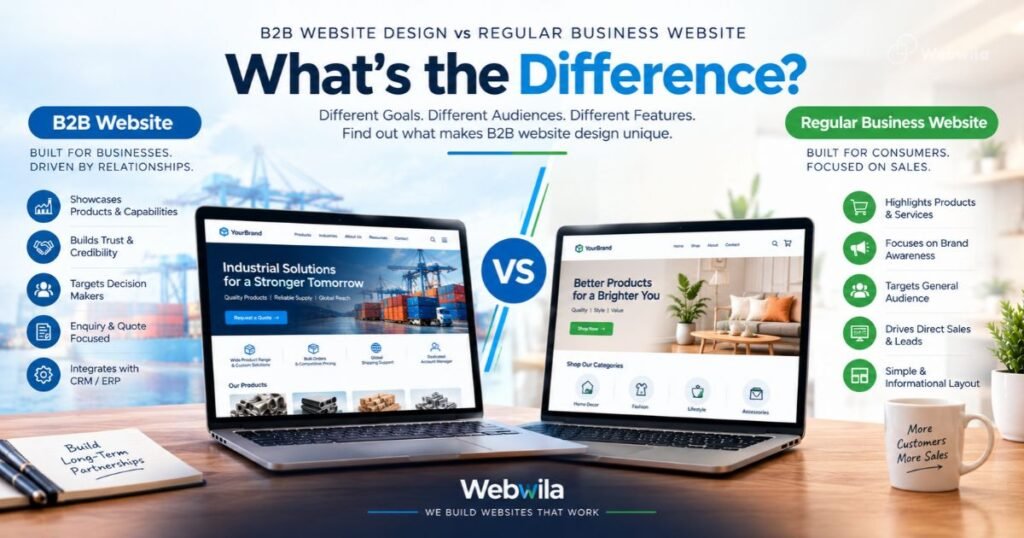
A B2B website has a different job from a typical business website. While a regular business website may focus on introducing a company and generating calls or local enquiries, a B2B website must help buyers evaluate products, understand capabilities, build trust and take the next step toward a business enquiry.
What Is B2B Website Design?
B2B website design is the planning and development of a website around business-to-business buyer journeys. The website needs to communicate products, capabilities, industries served, certifications, delivery information, technical details and commercial value clearly enough for buyers to make an informed decision.
For manufacturers, exporters, suppliers, wholesalers, distributors and trading companies, the website often works as a digital sales representative available 24/7.
B2B Website Design vs Regular Business Website
| Area | B2B Website | Regular Business Website |
|---|---|---|
| Primary goal | Generate qualified business enquiries and support buyer evaluation | Generate calls, visits, bookings or general enquiries |
| Audience | Procurement teams, distributors, importers, wholesalers and business buyers | Consumers, local customers or general visitors |
| Content | Product specifications, applications, industries, certifications, MOQ and commercial information | Services, basic product information, company details and general benefits |
| Conversion | RFQ, enquiry, catalogue request, sample request or sales consultation | Call, contact form, booking or purchase |
| Trust | Certifications, export markets, client industries, facilities, quality standards and case studies | Reviews, testimonials, portfolio and basic company information |
| SEO | Built around product, industry, application, location and buyer-intent searches | Often focused on brand, service and local searches |
1. B2B Websites Are Built Around Buyer Intent
B2B buyers usually arrive with a specific business requirement. They may be searching for a supplier, manufacturer, exporter, product specification, bulk pricing or a company serving a particular market.
Your website should therefore answer questions such as:
- What products do you supply?
- Who do you supply?
- What industries do you serve?
- Where do you deliver or export?
- What specifications and standards do you meet?
- How can a buyer request a quotation?
2. Product Information Matters More
A regular business website may be able to describe a service in a few sections. A B2B website often needs detailed product and category pages that help buyers compare options and understand whether your company can meet their requirements.
Useful information can include specifications, sizes, materials, applications, packaging, certifications, minimum order quantities, available variants and enquiry options.
3. Trust Signals Are Critical
Business buyers are taking a commercial risk when they contact a new supplier. Strong B2B website design makes proof easy to find.
- Certifications and quality standards
- Years of experience
- Manufacturing or production capabilities
- Export destinations
- Industries and markets served
- Client testimonials and case studies
- Factory, warehouse or team information
- Clear company contact details
For more on this, see our guide to website trust signals for international B2B buyers.
4. Navigation Needs to Match the Buyer Journey
A B2B website should make it easy to move from company discovery to product evaluation and enquiry. Navigation may include Products, Industries, Applications, About, Certifications, Markets Served, Resources and Contact or Request a Quote.
5. B2B Websites Need Stronger Lead Generation
The goal is not simply to make visitors browse pages. The website should give qualified buyers multiple clear ways to start a conversation.
- Request a Quote
- Send an Enquiry
- Request Product Catalogue
- Ask for Pricing
- Request a Sample
- Talk to Sales
Calls-to-action should appear naturally throughout product pages, category pages and other high-intent sections.
6. SEO Architecture Is Different
B2B SEO can target a much wider range of commercial searches than a simple service website. A manufacturer, supplier or exporter can create relevant landing pages around products, applications, industries, locations and buyer needs.
For example, instead of relying only on a broad keyword such as “industrial products,” a website may target specific searches around a product + application, product + location or supplier/manufacturer intent.
Our SEO services can support this structure with technical SEO, content and search visibility strategies.
7. Commercial Landing Pages Become More Important
A B2B website should not depend entirely on the homepage to generate enquiries. Dedicated product, industry, application and location pages can match specific buyer searches and guide visitors toward an enquiry.
8. The Conversion Journey Is Longer
A consumer may visit a website and purchase immediately. B2B buyers often need to research, compare suppliers, check specifications, consult internally and then contact sales.
Good B2B design supports that longer journey with clear information, downloadable resources, proof, FAQs and strong enquiry opportunities.
9. Mobile Experience Still Matters
Even when the final purchasing decision happens on a desktop, B2B buyers increasingly discover suppliers and review information on mobile devices. Pages need to load quickly, content needs to be readable and enquiry actions need to be easy to access.
10. B2B Websites Should Be Ready for Google and AI Search
Modern B2B website design should make company, product and service information easy for search engines and AI-powered discovery systems to understand. Clear page structures, descriptive headings, useful content, consistent business information and strong internal linking all help create a more understandable digital presence.
What Should a B2B Website Include?
- Clear B2B-focused homepage
- Product and category pages
- Industry or application pages
- Detailed company/about information
- Certifications and quality standards
- Markets served or export destinations
- Case studies and testimonials
- Product catalogues or downloadable resources
- Request-a-quote and enquiry forms
- Strong contact and sales CTAs
- SEO-friendly page structure
- Fast, mobile-friendly performance
- Analytics and search monitoring
Who Needs B2B Website Design?
B2B website design is especially valuable for:
- Manufacturers
- Exporters and importers
- Suppliers
- Wholesalers and distributors
- Trading companies
- Industrial businesses
- Engineering companies
- Textile and garment businesses
- Food and agriculture suppliers
- B2B service companies
Build a Website That Supports Your Sales Team
A B2B website should do more than look professional. It should help the right buyers discover your business, understand what you offer, trust your company and take the next step.
At WebWila, we build B2B websites around buyer intent, Google visibility, trust and qualified enquiries. Explore our B2B Website Development service or contact us to discuss your requirements.
FAQs
Is a B2B website different from a normal business website?
Yes. A B2B website is structured around business buyers, product or service evaluation, trust signals and qualified enquiries rather than only general company information.
Does every B2B business need a product catalogue website?
Not every business needs the same structure, but companies with multiple products, specifications or variants often benefit from detailed product and category pages.
Can a B2B website help with Google rankings?
Yes. A well-structured B2B website can create relevant pages for product, industry, application and location searches while providing useful content for buyers and search engines.
Should B2B websites focus on leads or online sales?
It depends on the business model. For many manufacturers, exporters and suppliers, the primary conversion is an enquiry, RFQ, catalogue request or sales conversation rather than an immediate online purchase.
Final Takeaway
The biggest difference is purpose. A regular business website introduces a company and its services. A strong B2B website is designed to support the entire buyer journey—from search and discovery to product evaluation, trust and enquiry.